
A Complete Guide for Men Who Want Clear Answers
Frequent urination is a symptom many men experience — especially as they get older. But how do you know if it’s really the prostate causing it? This comprehensive article will explain everything in simple, easy-to-understand language. We’ll explore the causes, symptoms, diagnosis, and when to see a doctor.
By the end, you’ll clearly know when the prostate is the likely cause of frequent urination and what steps to take next.
Table of Contents
- What Is the Prostate?
- Why the Prostate Affects Urination
- Common Prostate Conditions That Cause Frequent Urination
3.1 Benign Prostatic Hyperplasia (BPH)
3.2 Prostatitis
3.3 Prostate Cancer - How Frequent Urination From the Prostate Feels
- Other Urinary Symptoms That Point to the Prostate
- How Doctors Determine That the Prostate Is the Cause
6.1 Medical History
6.2 Physical Examination
6.3 Urine and Blood Tests
6.4 Prostate-Specific Antigen (PSA) Test
6.5 Advanced Imaging and Tests - When Frequent Urination Isn’t Prostate-Related
- Simple Self-Monitoring Tips
- When to See a Doctor Immediately
- Conclusion
- Disclaimer
1. What Is the Prostate?
The prostate is a walnut-sized gland that is part of the male reproductive system. It sits just below the bladder and surrounds the urethra — the tube that carries urine out of the body. The prostate’s main role is to produce fluid that nourishes and transports sperm. وزارة الصحة السعودية
Because of its position around the urethra, even a small change in prostate size or function can affect how urine flows from the bladder.
2. Why the Prostate Affects Urination
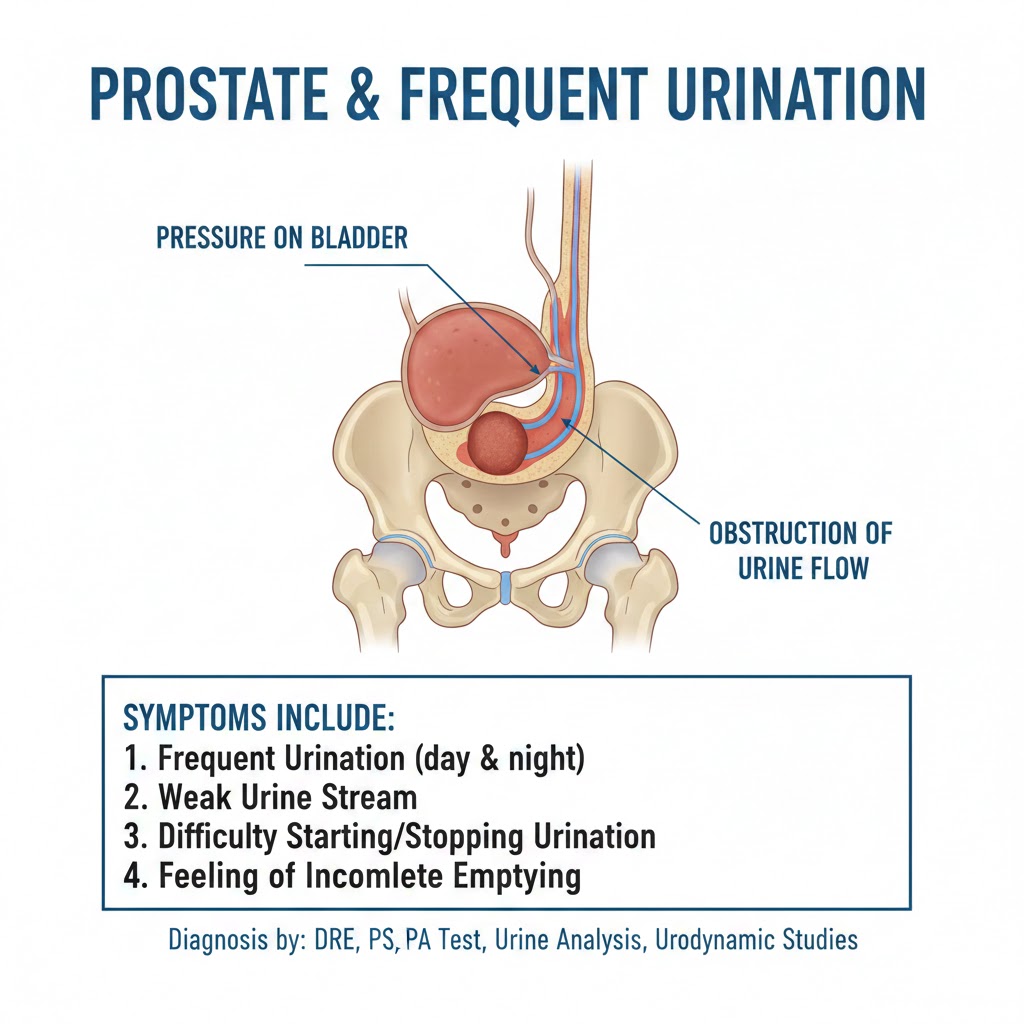
The prostate wraps around the urethra like a ring. When it enlarges or becomes inflamed, it squeezes or blocks the urethra. This can cause poor bladder emptying and frequent urges to urinate.
Unlike bladder or kidney problems, prostate-related urinary issues happen because the organ that controls urine flow is compromised. Institut national du diabète et des maladies digestives et rénales
3. Common Prostate Conditions That Cause Frequent Urination
There are three main prostate conditions that can make men go to the bathroom often:
3.1 Benign Prostatic Hyperplasia (BPH)
BPH is the most common cause of urinary symptoms in men over 50. It’s a non-cancerous enlargement of the prostate that pushes against the urethra and slows urine flow. This leads to frequent urination — especially at night. Institut national du diabète et des maladies digestives et rénales+1
Key symptoms include:
- Urgent need to urinate
- Frequent urination (especially at night)
- Difficulty starting and stopping urination
- Weak urine stream
- Feeling your bladder isn’t empty afterward
3.2 Prostatitis
Prostatitis refers to inflammation or infection of the prostate, and it can cause sudden or painful urination. Prostatitis may occur in younger men too and is often accompanied by pain in the lower abdomen, groin, or perineum (area between scrotum and anus). Mayo Clinic
3.3 Prostate Cancer
Prostate cancer can sometimes lead to urinary symptoms like frequent urination. However, early prostate cancer may not cause any symptoms at all. That’s why doctors use tests like PSA and imaging to help diagnose or rule out cancer. Hopkins Medicine
4. How Frequent Urination From the Prostate Feels
When the prostate is the cause, frequent urination usually comes with specific patterns:
- Small amounts of urine each time
- Waking up frequently at night
- Sudden urgency that’s hard to hold
- Slow or weak urinary stream
- Stopping and starting mid-urination
These symptoms are often grouped under the medical term lower urinary tract symptoms (LUTS). WebMD
5. Other Urinary Symptoms That Point to the Prostate
Frequent urination caused by prostate problems is often not the only symptom. Look for:
- Weak stream or straining to urinate
- Dribbling at the end of urination
- Inability to completely empty the bladder
- Pain during or after urination
- Blood in the urine (less common but serious)
These symptoms suggest that the prostate or lower urinary tract is involved. Institut national du diabète et des maladies digestives et rénales+1
6. How Doctors Determine That the Prostate Is the Cause
It’s not enough to assume the prostate is the reason behind frequent urination. Doctors use a structured approach to make an accurate diagnosis.
6.1 Medical History
Your doctor will ask:
- When symptoms began
- How often you urinate
- Whether symptoms are worse at night
- Any pain or urgency
- Medications you take
This helps rule out other causes. Mayo Clinic
6.2 Physical Examination
A key part of the exam is the digital rectal exam (DRE). The doctor gently feels the prostate through the rectum to check its size, shape, and texture. Hopkins Medicine
6.3 Urine and Blood Tests
- Urinalysis checks for infections.
- Blood tests can show kidney function or other issues. Mayo Clinic
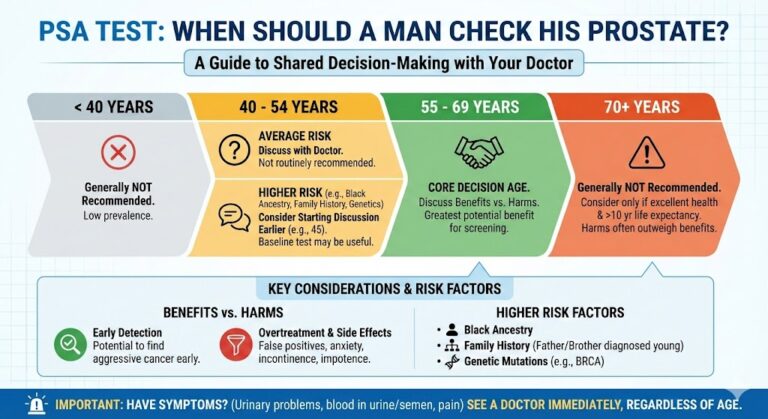
6.4 Prostate-Specific Antigen (PSA) Test
PSA is a protein made by the prostate. Higher levels can indicate BPH, inflammation, or cancer. PSA alone isn’t definitive but helps guide the next steps. Hopkins Medicine
6.5 Advanced Imaging and Tests
- Ultrasound to measure prostate size
- Uroflowmetry to assess urine flow strength
- Residual urine measurement to see how much remains after urination
- Cystoscopy to directly view the urinary tract
These tests help confirm the diagnosis and rule out other causes. Mayo Clinic
7. When Frequent Urination Isn’t Prostate-Related
Not all frequent urination comes from the prostate.
Other causes include:
- Urinary tract infections (UTIs)
- Overactive bladder
- Bladder stones
- Kidney disease
- Diabetes
- Certain medications
Your doctor will rule out these before confirming a prostate cause. Institut national du diabète et des maladies digestives et rénales
8. Simple Self-Monitoring Tips
To help your doctor diagnose the cause:
- Track how often you urinate each day
- Note how many times you wake at night
- Record symptoms like urgency or pain
- Note fluid intake before bedtime
This “voiding diary” gives useful insight into your symptoms.
9. When to See a Doctor Immediately
Seek prompt medical care if you experience:
- Inability to urinate at all
- Severe pain
- Blood in the urine
- Fever with urinary symptoms
- Sudden worsening of symptoms
These can signal complications like infection, stones, or acute urinary retention. Institut national du diabète et des maladies digestives et rénales
10. Conclusion
Frequent urination can be annoying — but when it’s caused by the prostate, it’s often due to Benign Prostatic Hyperplasia (BPH) or, less commonly, prostatitis or prostate cancer.
You know the prostate is likely the cause when:
- You have frequent and urgent urination plus
- Other prostate-related urinary symptoms
- Exams and tests (DRE, PSA, imaging) point to prostate issues
A doctor’s evaluation is essential — especially if symptoms interfere with daily life.
Reliable Sources for Further Reading
Here are links to trusted medical resources for more detailed information:
🔗 National Institute of Diabetes and Digestive and Kidney Diseases (NIDDK) – Prostate Health & BPH
https://www.niddk.nih.gov/health-information/urologic-diseases/prostate-problems/prostate-enlargement-benign-prostatic-hyperplasia Institut national du diabète et des maladies digestives et rénales
🔗 Mayo Clinic – BPH Overview (Symptoms & Causes)
https://www.mayoclinic.org/diseases-conditions/benign-prostatic-hyperplasia/symptoms-causes/syc-20370087 Mayo Clinic
🔗 Cleveland Clinic – BPH Information
https://my.clevelandclinic.org/health/diseases/9100-benign-prostatic-hyperplasia Cleveland Clinic
🛑 Disclaimer: This article is for educational purposes only and does not replace professional medical advice. Always consult a healthcare provider for diagnosis and treatment tailored to your condition.