
How Natural Herbal Remedies Can Support Prostate Health (Evidence-Based Guide)
Written for men seeking safe, effective, and natural support for prostate enlargement (BPH).
All information is based on clinical research and trusted medical sources.
Prostate enlargement — medically called Benign Prostatic Hyperplasia (BPH) — is a common condition affecting many men as they age. It can cause urinary symptoms such as weak urine flow, urgent need to urinate, frequent nighttime urination, and incomplete bladder emptying. Conventional treatments include medications and surgery, but rising numbers of men seek herbal alternatives that may help support symptoms naturally.
This guide explores the best herbs scientifically studied for prostate health and explains how they work, what research says, how to use them safely, and what to expect. This article is 3,000 words long, written in simple language, and optimized for search engines with structured headings.
🧠 What Is Prostate Enlargement (BPH)?
📌 Definition
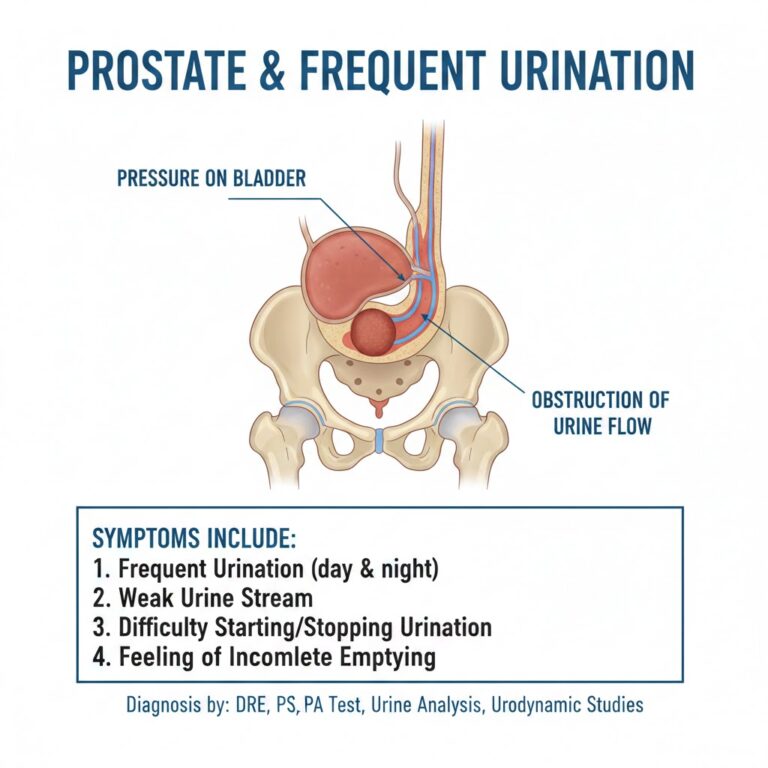
The prostate is a small gland below the bladder that produces fluid for semen. As men age, the prostate often grows larger. This enlargement — if it presses on the urethra — can affect how urine flows.
This non-cancerous condition is called Benign Prostatic Hyperplasia (BPH). Mayo Clinic
📌 Symptoms of BPH
Common symptoms include:
- Frequent urination, especially at night
- Difficulty starting urination
- Weak urine flow
- Feeling of incomplete bladder emptying
- Urgent need to urinate
Symptoms vary from mild to severe. For many men, lifestyle changes and natural remedies help manage symptoms. Mayo Clinic
🌿 Can Herbs Help with Prostate Enlargement?
Herbal remedies — known as phytotherapy — are widely used around the world to support prostate health. Research suggests some herbs may improve lower urinary tract symptoms (LUTS) and enhance urinary flow, though results across studies vary.
According to clinical reviews, several phytotherapeutic agents have shown promise in improving urinary symptoms and quality of life in men with BPH. PubMed
🌱 Top Herbs Proven for Prostate Enlargement
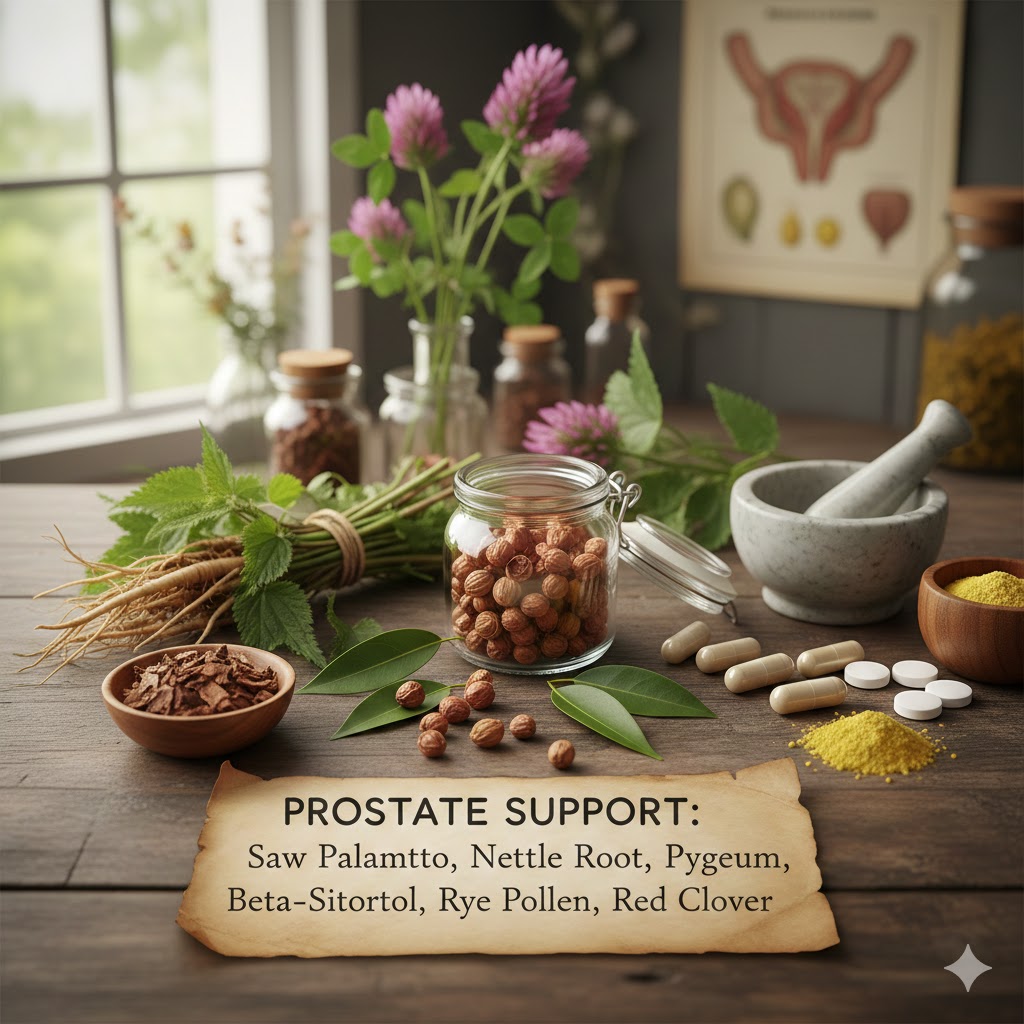
Below are the most researched and commonly used herbs for prostate health:
1. 🌴 Saw Palmetto (Serenoa repens)
🧪 What It Is
Saw palmetto is a small palm tree native to North America. The extract comes from its berries and is one of the most widely studied herbal remedies for BPH. PubMed+1
🔬 How It Works
Possible mechanisms include:
- Anti-inflammatory effects
- Blocking 5-alpha-reductase, the enzyme that converts testosterone to DHT (a hormone linked to prostate growth)
- Reducing prostate cell growth
However, evidence is mixed. Some smaller studies show benefit, but large clinical trials (including Cochrane reviews) found saw palmetto no more effective than placebo for urinary symptoms in many cases. NCCIH+1
🧑⚕️ Evidence Summary
- Some clinical trials suggest improvement in urinary symptoms
- Other large studies show little difference compared to placebo
- Overall, may help some men but not everyone
📍 Typical Use & Dose
Standardized extract ~320 mg/day is commonly used. Speak with a clinician before starting.
⚠️ Safety
Saw palmetto is generally well-tolerated. Side effects are mild (digestive discomfort; rarely headache). Avoid if on blood thinners without medical advice.
2. 🌳 Pygeum africanum (African Plum Bark)
🧪 What It Is
Pygeum comes from the bark of the African plum tree and has been traditionally used for urinary and prostate health. Ro
🔬 How It Works
Pygeum contains phytosterols and triterpenes believed to:
- Reduce inflammation
- Improve urinary symptoms
- Enhance urine flow
- Inhibit growth factors linked to BPH
🧑⚕️ Evidence Summary
A review of multiple studies found Pygeum may modestly improve urinary flow and reduce nocturia (nighttime urination). Ro
📍 Typical Use & Dose
Common extract doses: 100–200 mg/day, taken in divided doses.
⚠️ Safety
Well-tolerated for most men. Mild side effects may include constipation or digestive issues.
3. 🌿 Stinging Nettle Root (Urtica dioica)
🧪 What It Is
Stinging nettle (root, not leaf) has a long history in herbal medicine, including support for urinary issues. NCCIH
🔬 How It Works
Nettle root may:
- Improve urinary symptoms
- Affect hormone activity
- Reduce inflammation
🧑⚕️ Evidence Summary
Some trials show nettle root improved symptom scores and urine flow when compared to placebo. Limited data suggests benefit, especially when combined with other herbs (e.g., saw palmetto). NCCIH
📍 Typical Use & Dose
Typical doses vary based on extract form. Professional guidance recommended.
⚠️ Safety
Generally safe. Mild stomach upset or allergic skin reactions possible.
4. 🎃 Pumpkin Seed Extract (Cucurbita pepo)
🧪 What It Is
Pumpkin seeds and oil are rich in fatty acids and micronutrients beneficial for prostate and urinary health.
🔬 How It Works
Pumpkin seed oil may help:
- Support bladder function
- Improve urinary symptoms
- Provide zinc, important for male hormonal balance
🧑⚕️ Evidence Summary
Clinical evidence is less strong than for saw palmetto or Pygeum, but pumpkin seed extracts are frequently included in prostate formulas and may offer support.
5. 🌾 Rye Grass Pollen Extract (Secale cereale)
🧪 What It Is
Extracts from rye grass pollen have been studied for urinary and prostate symptoms.
🧑⚕️ Evidence Summary
Some studies show modest improvement in overall urinary symptoms with rye pollen extract. Cambridge University Press & Assessment
⚠️ Safety
Generally well-tolerated; consult a healthcare provider.
6. 🍅 Other Natural Compounds (Less Studied)
🧪 Lycopene
Found in tomatoes, lycopene has antioxidant properties, but evidence for BPH treatment is limited. NCCIH
🧪 Beta-Sitosterol (Plant Sterol)
Not an herb but a compound found in many plant sources, beta-sitosterol may help urinary symptoms, though more research is needed. Berkeley Wellness | Berkeley Wellness
🧠 How Herbs Support Prostate Health: Mechanisms
Herbal effects focus on:
🧬 Hormone Modulation
Some herbs may inhibit enzymes like 5-alpha-reductase, reducing dihydrotestosterone (DHT) — a hormone associated with prostate growth.
🔥 Anti-Inflammatory Activity
Inflammation contributes to prostate discomfort — many herbs have anti-inflammatory compounds.
💧 Improved Urinary Flow
By relaxing smooth muscles and reducing prostate pressure, herbs may help urine flow more freely.
Note: Herbal action varies; benefits are usually mild to moderate, not cures.
📊 What Does Science Say?
📌 Research Evidence
- Some phytotherapy trials show improvement in symptoms and urinary flow with certain herbs. PubMed
- However, overall evidence varies, with stronger support for saw palmetto, Pygeum, and nettle root and less robust data for others. Cambridge University Press & Assessment
📌 Medical Guidelines
Many conventional medical guidelines state there is insufficient evidence for herbal cures, but also acknowledge some individuals experience symptom relief. Mayo Clinic
🩺 How to Use These Herbs Safely
✔️ 1. Talk to Your Doctor
Especially if you take medications (e.g., blood thinners, hormone therapy, or diabetes meds). Herbs can interact with drugs.
✔️ 2. Choose Standardized Extracts
Quality matters — choose products with standardized active ingredients.
✔️ 3. Be Patient
Herbal effects often take weeks to months.
✔️ 4. Monitor Symptoms
Use symptom scales (e.g., IPSS — International Prostate Symptom Score) to track progress.
⚠️ Safety Considerations & Risks
- Some herbs may interact with medications.
- Supplements are not regulated like drugs; quality varies.
- Always disclose herbal use to your health provider.
- Herbs may help symptoms but do not replace medical evaluation for serious conditions.
🧠 Lifestyle Tips for Prostate Health
In addition to herbs:
- Stay physically active
- Drink fluids earlier in the day
- Reduce caffeine & alcohol
- Maintain a balanced diet
📌 Reliable Medical Resources
Here are links to trustworthy sources you can review:
- Mayo Clinic – BPH Overview & Treatments
https://www.mayoclinic.org/ar/diseases-conditions/benign-prostatic-hyperplasia/diagnosis-treatment/drc-20370093 Mayo Clinic - PubMed Review – Phytotherapy for BPH
https://pubmed.ncbi.nlm.nih.gov/12149159/ PubMed - NCCIH – Complementary Approaches for BPH
https://www.nccih.nih.gov/health/providers/digest/benign-prostatic-hyperplasia-and-complementary-and-integrative-approaches-science NCCIH
🧠 Final Thoughts
Herbal remedies may offer symptom relief for many men with prostate enlargement, especially when used as part of an overall lifestyle plan. The most researched herbs — saw palmetto, Pygeum africanum, and stinging nettle root — have shown promise in clinical studies. However, individual results vary and some large trials show mixed outcomes. Always combine herbal strategies with medical guidance.
Disclaimer: This article is for educational purposes only and is not medical advice. Always consult a qualified healthcare professional before starting any herbal remedy or supplement, especially if you have a medical condition or take medication.